Boje v Karpatoch v rokoch 1914 – 1915
Narastajúce mocenské ambície Nemecka na začiatku 20. storočia ostro kontrastovali s vtedajšou medzinárodnou situáciou. Nemecké vládnuce kruhy sa snažili narušiť vtedajšie rozdelenie sveta medzi Veľkou Britániou, Francúzskom a Ruskom.
Sarajevský atentát na rakúsko-uhorského arcivojvodu Františka Ferdinanda d´Este bol len zámienkou na rozpútanie vojny, ktorá mala nastoliť nové rozdelenie sveta s väčším vplyvom Nemecka.
Battles in the Carpathians in 1914-1915
The growing power ambitions of Germany at the beginning of the 20th century sharply contrasted with the international situation at the time. The German ruling circles tried to disrupt the then division of the world between Great Britain, France and Russia.
The Sarajevo assassination of the Austro-Hungarian Archduke Franz Ferdinand d‘Este was just an occasion for starting a war that was supposed to establish a new division of the world with greater German influence.
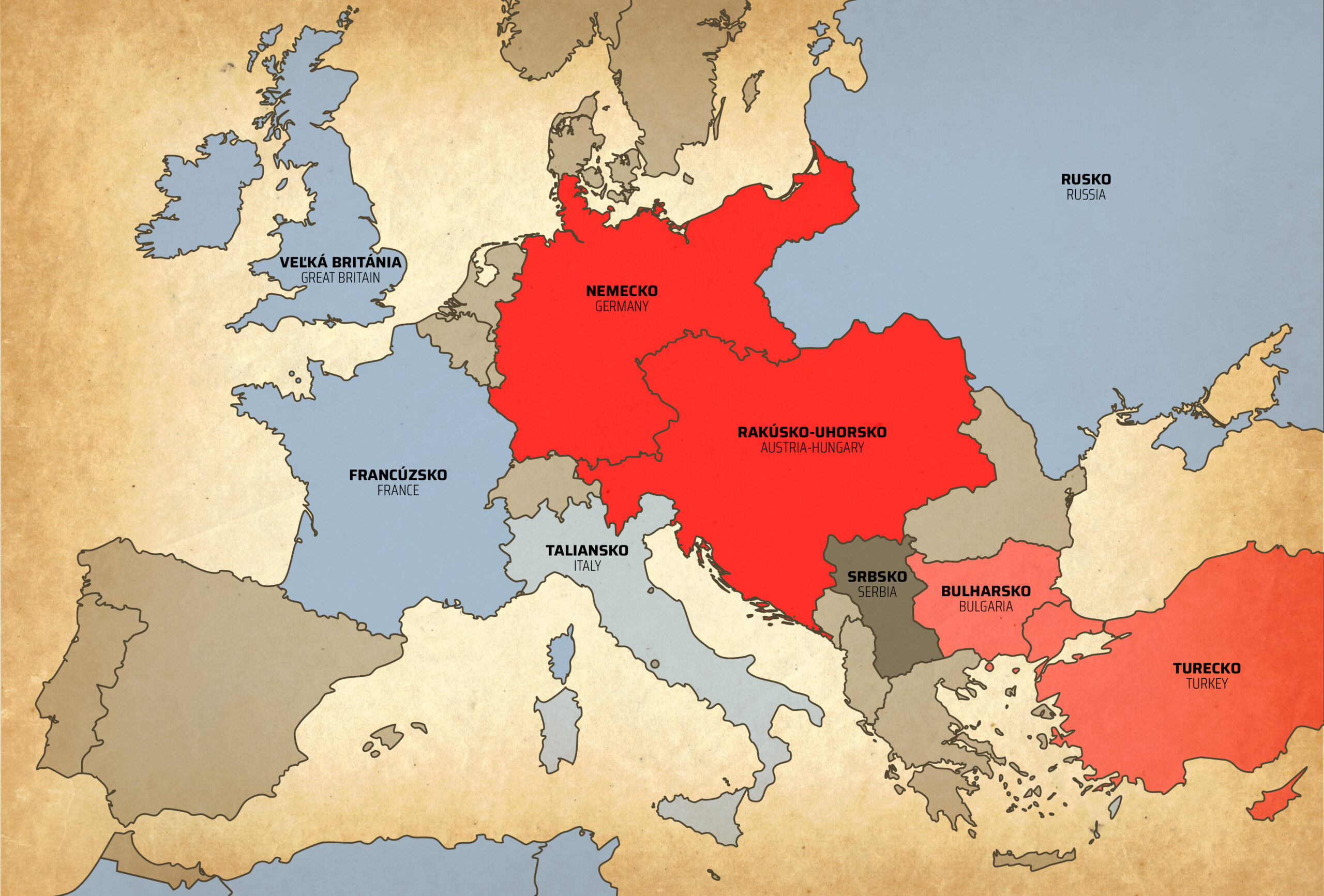
Mesiac po atentáte, 28. júla 1914, vyhlásilo Rakúsko-Uhorsko vojnu Srbsku, čo spustilo reťazovú reakciu. Do konfliktu postupne vstúpili štáty zoskupené v tzv. Dohode a štáty zoskupené v tzv. Bloku centrálnych, resp. Ústredných mocností.
K Dohode patrili napr. Francúzsko, Veľká Británia, Rusko, Taliansko (na začiatku vojny bolo na strane Ústredných mocností) a od roku 1917 sa pripojili aj USA.
K bloku Ústredných mocností patrili Nemecko
a Rakúsko-Uhorsko, ku ktorým sa neskôr pripojili Turecko
a Bulharsko.
Priamo, či nepriamo sa do vojenského konfliktu postupne zapojilo 33 štátov s vyše 1,5 miliardou obyvateľstva.
A month after the assassination, on July 28, 1914,
Austria-Hungary declared war on Serbia, which set off
a chain reaction. States grouped in the so-called Agreement gradually entered the conflict and states grouped in the
so-called Block of Central Powers or Headquarters.
The Agreement included e.g. France, Great Britain, Russia, Italy (at the beginning of the war it was on the side of the Headquarters) and from 1917 the USA also joined.
The Headquarters included Germany and Austria-Hungary, which were later joined by Turkey and Bulgaria.
Directly or indirectly, 33 states with over 1.5 billion people gradually joined the military conflict.
V Haliči (historické územie v juhovýchodnom Poľsku a časti západnej Ukrajiny) vstúpilo Rakúsko-Uhorsko do bojov proti Rusku 23. augusta 1914 ofenzívou, ktorá mala zaskočiť nepriateľa.
Po ťažkých bojoch v mesiacoch september a október roku 1914 sa ruské cárske vojská priblížili ku karpatským hrebeňom. Krvavé boje prebehli v strategicky dôležitom Karpatskom oblúku a v jeho priesmykoch, cez ktoré sa chcela ruská armáda prebojovať na územie Uhorska.
Bezprostredné vojnové operácie zasiahli od novembra 1914 do mája 1915 šesť okresov súčasného Prešovského kraja (Bardejov, Svidník, Stropkov, Medzilaborce, Humenné
a Snina). V tomto období nadobudlo dnešné územie severovýchodného Slovenska veľký strategický význam a karpatský úsek Východného frontu sa stal miestom bojových operácii, ktoré rozhodovali o ďalšom priebehu prvej svetovej vojny.
In Galicia (historical territory in south-eastern Poland and parts of western Ukraine), Austria-Hungary entered the fight against Russia on August 23, 1914 with an offensive that was supposed to surprise the enemy.
After heavy fighting in the months of September and October 1914, the Russian tsarist troops approached the Carpathian ridges. Bloody battles took place in the strategically important Carpathian Arch and its passes through which the Russian army wanted to fight its way to the territory of Hungary.
From November 1914 to May 1915, immediate war operations affected six districts of the current Prešov region (Bardejov, Svidník, Stropkov, Medzilaborce, Humenné and Snina). In this period, today‘s territory of northeastern Slovakia acquired great strategic importance, and the Carpathian section of the Eastern Front became the site of combat operations that decided the further course of the World War I.
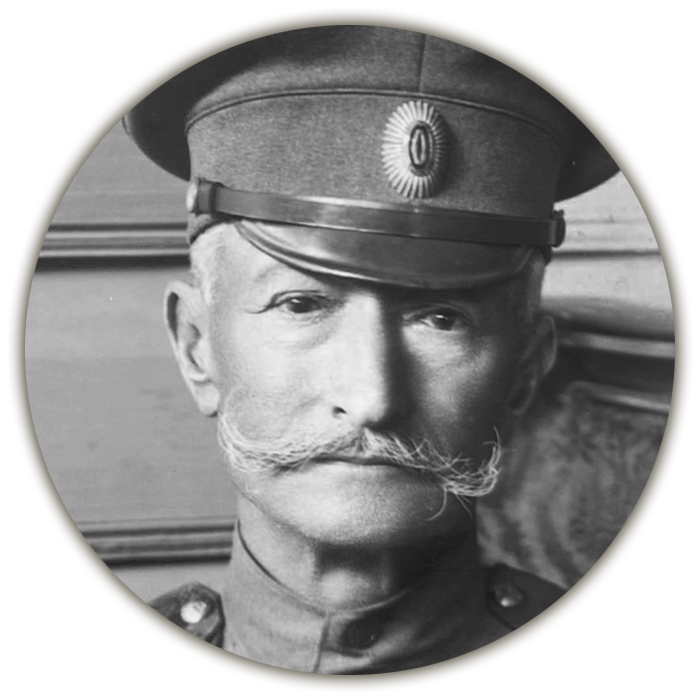
Veliteľ 8. ruskej armády
generál Alexej Alexejevič Brusilov
Commander of the 8th Russian Army,
Gen. Alexey Alexeyevich Brusilov
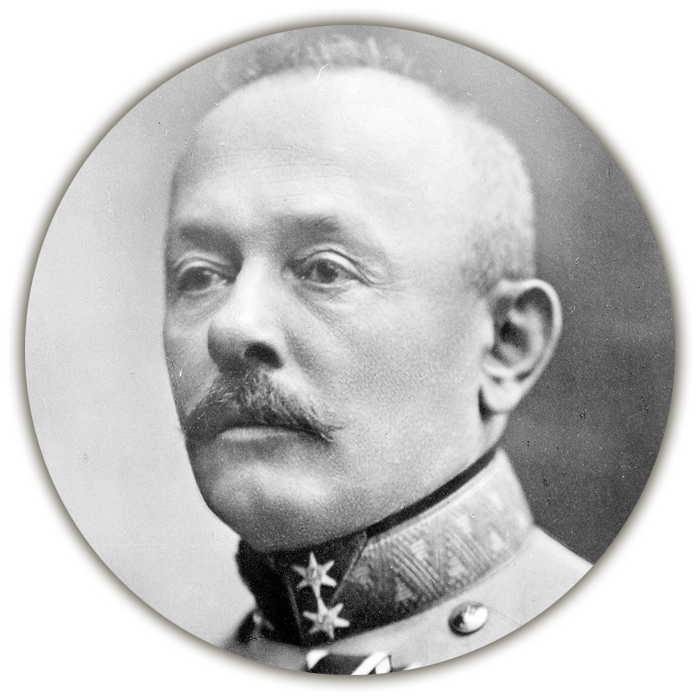
Veliteľ 3. rakúsko-uhorskej armády
generál Svetozár Boroevič von Bojna
Commander of the 3rd Austro-Hungarian Army,
Gen. Svetozar Boroevic von Bojna
Ruská 8. armáda generála Alexeja Alexejeviča Brusilova zaútočila 13. novembra 1914 smerom do Karpát. Cieľom útoku bolo vytlačiť ustupujúce rakúsko-uhorské vojska za Karpaty.
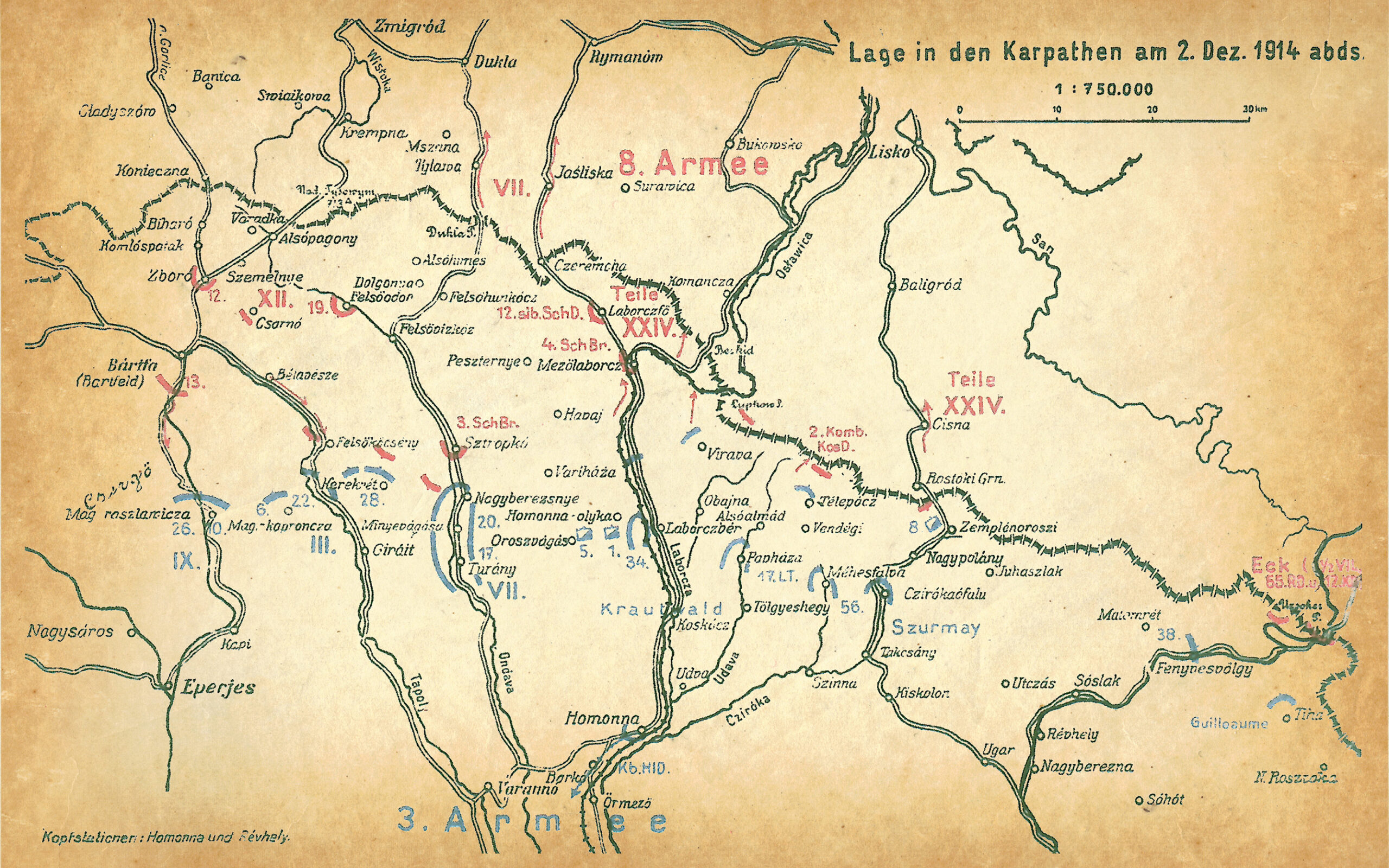
Urputné boje prebiehali na celej frontovej karpatskej línii. Hlavný útok ruskej armády sa sústredil na stred rakúsko-uhorskej 3. armády pod velením generála Svetozára Boroeviča. Ruským vojakom sa podarilo 23. novembra obsadiť mestá Snina a Humenné. Obe mestá držali ruskí vojaci do 28. novembra 1914, kedy boli vytlačení bojovými skupinami Krautwald
a Szurmay.
Ťažké boje prebiehali aj o Dukliansky priesmyk a k 3. decembru 1914 sa Rusom podarilo obsadiť 126 obcí Šarišskej župy z celkového počtu 378, medzi nimi aj mestá Bardejov, Stropkov a Medzilaborce. 7. – 9. decembra sa ruské vojská stiahli zo slovenského územia
do Poľska.
The Russian 8th Army of General Alexey Alexeyevich Brusilov attacked on November 13, 1914 in the direction of the Carpathians. The goal of the attack was to push the retreating Austro-Hungarian troops beyond the Carpathians.
Fierce fighting took place on the entire Carpathian front line. The main attack of the Russian army was concentrated on the centre of the Austro-Hungarian 3rd Army under the command of General Svetozar Boroevic. On November 23, Russian soldiers managed to occupy the towns of Snina and Humenné. Both cities were held by Russian soldiers until November 28, 1914, when they were pushed out by battle groups Krautwald and Szurmay.
Heavy fighting also took place for the Dukla Pass, and by December 3, 1914, the Russians managed to occupy 126 villages of the Šariš County out of a total of 378, including the towns of Bardejov, Stropkov and Medzilaborce. On December 7-9, Russian troops withdrew from Slovak territory to Poland.
Bojová situácia v Karpatoch
k 2. decembru 1914
Combat situation in the Carpathians
on December 2, 1914
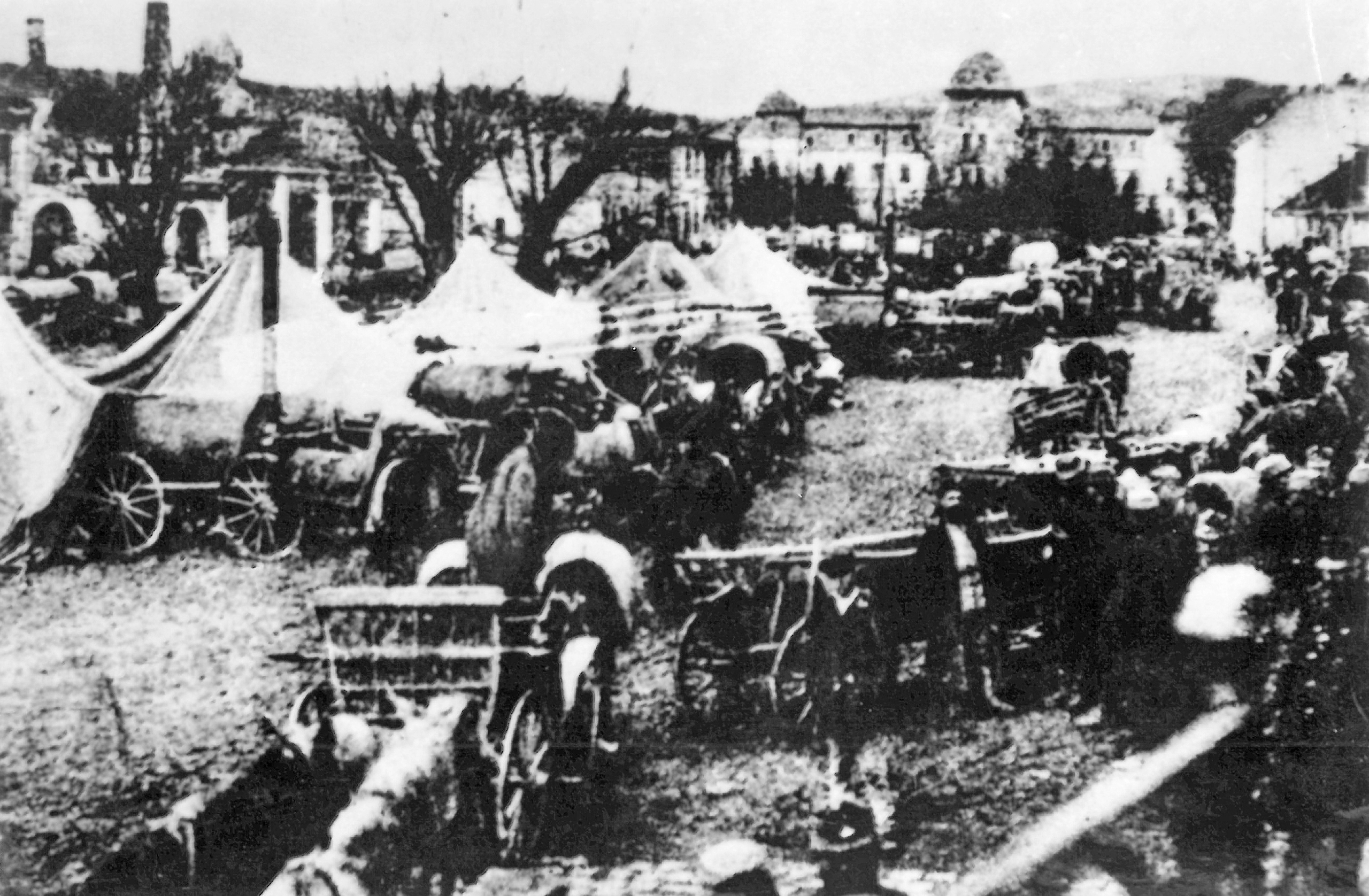
Mesto Humenné počas 1. svetovej vojny (1914)
The town of Humenné during World War I (1914)
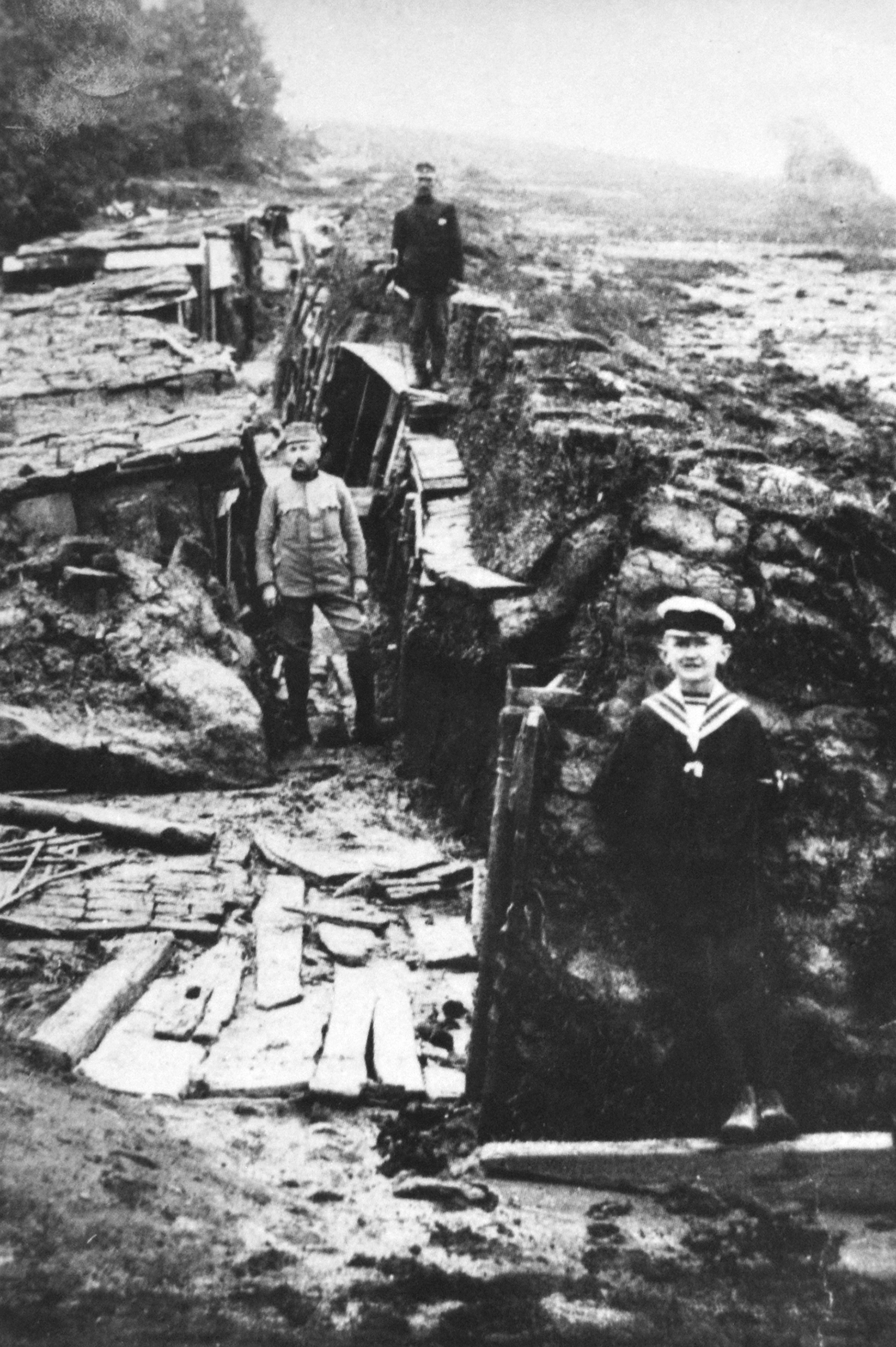
Zákopy maďarských vojakov v Šarišskej župe
Trenches of Hungarian soldiers in the Šariš County
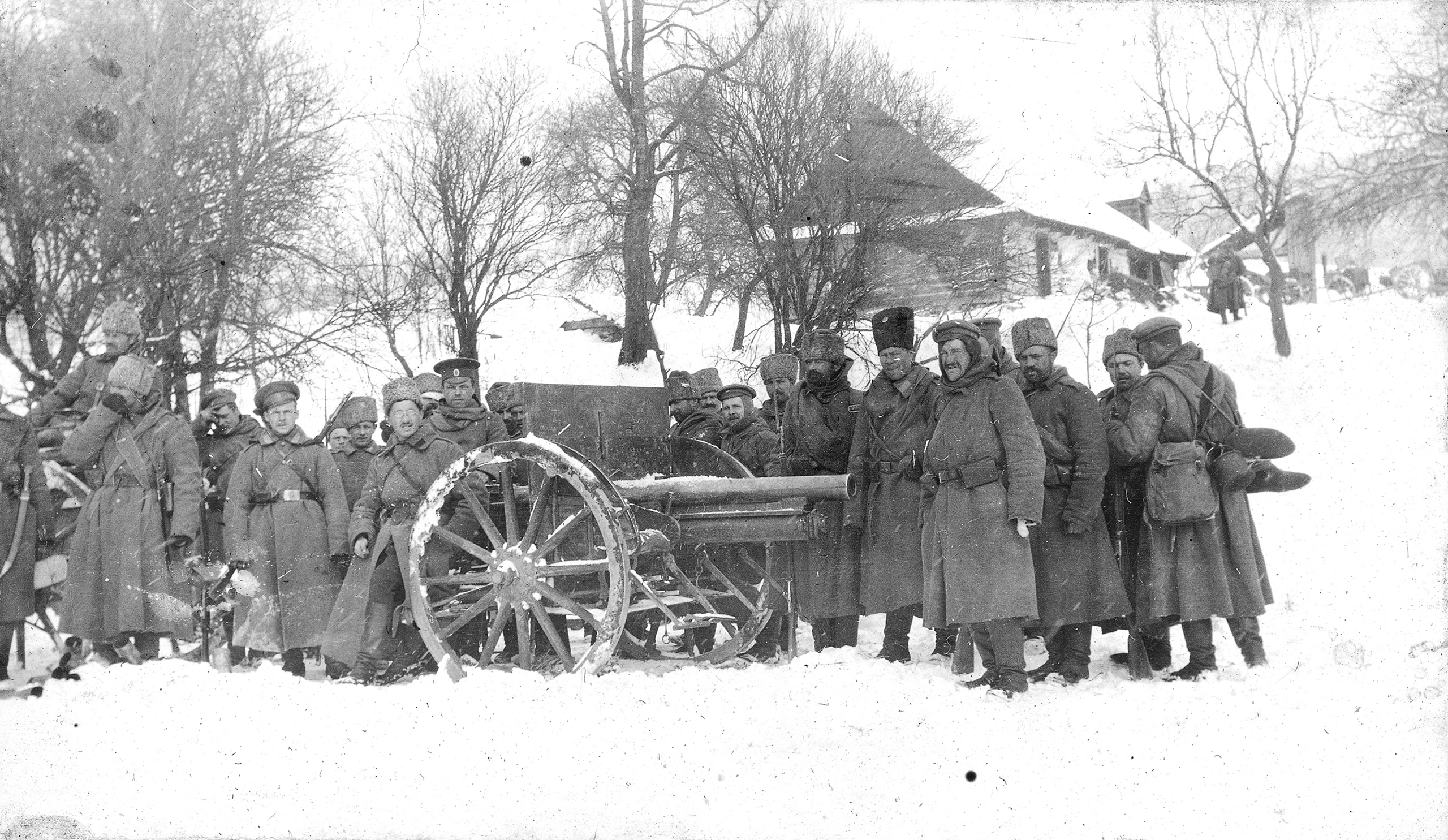
Ruskí vojaci 12. pluku s ukoristeným rakúsko-uhorským delom v Krajnej Bystrej v zime 1914 – 1915
Russian soldiers of the 12th regiment with a captured Austro-Hungarian cannon in Krajná Bystra in the winter of 1914-1915

Odovzdávanie zástavy 28. pešieho pluku tzv. „pražských detí“ veliteľstvu 3. zboru v Bardejove
Handing over the flag of the 28th infantry regiment,
the so-called “Children of Prague” to the headquarters
of the 3rd Corps in Bardejov

Palebné postavenie rakúsko-uhorských delostrelcov
v Karpatoch
Firing position of Austro-Hungarian artillerymen
in the Carpathians
Koncom roka 1914 bol stav rakúsko-uhorskej 3. armády kritický. V prednej línii bolo z pôvodných 1 180 000 mužov a 53 000 dôstojníkov len 546 000 radových vojakov a 25 000 dôstojníkov.
At the end of 1914, the state of the Austro-Hungarian 3rd Army was critical.
In the front line, out of the original 1,180,000 men and 53,000 officers, there were only 546,000 rank-and-file soldiers and 25,000 officers.
V januári 1915 z dôvodu kritickej situácie Boroevičovej 3. armády na fronte boli presunuté
do Mukačeva a Chustu nemecké jednotky tzv. Južnej armády a doplnené o rakúsko-uhorskú 19. divíziu. Takto posilnená rakúsko-uhorská armáda mala vytlačiť ruskú 8. armádu z Karpát
a rýchlo pomôcť brániacim sa rakúskom-uhorským vojakom v obliehanej pevnosti v Przemysli (Poľsko). Intenzita bojov sa v roku 1915 stupňovala. Frontová línia sa neustále pohybovala. Rakúski dôstojníci nazvali tento spôsob boja ako „gummi-krieg“ (gumová vojna). Na bojisku mala prevahu strana, ktorá v danom momente mala k dispozícii väčšie množstvo čerstvých záložných jednotiek. Tvrdé boje prebiehali o Dukliansky a Lupkovský priesmyk. Začiatkom februára 1915 sa ruská ofenzíva vyčerpala a frontová línia sa stabilizovala.
In January 1915, due to the critical situation of Boroevic‘s 3rd Army at the front, the so-called German units of the Southern Army were moved to Mukachevo and Chust and supplemented by the Austro-Hungarian 19th Division. The Austro-Hungarian army strengthened in this way was supposed to push the Russian 8th Army out of the Carpathians and quickly help the defending Austro-Hungarian soldiers in the besieged fortress in Przemysl (Poland).
The intensity of the fighting was increasing in 1915. The front line was constantly moving. Austrian officers called this way of fighting „gummi-krieg“ (rubber war). On the battlefield,
the side that had a greater number of fresh reserve units at its disposal at the time had the predominance. Fierce battles took place for the Dukla and Lupkov Passes. At the beginning
of February 1915, the Russian offensive exhausted itself and the front line stabilized.

Zajatí ruskí vojaci v Šarišskej župe
Captured Russian soldiers in Šariš County
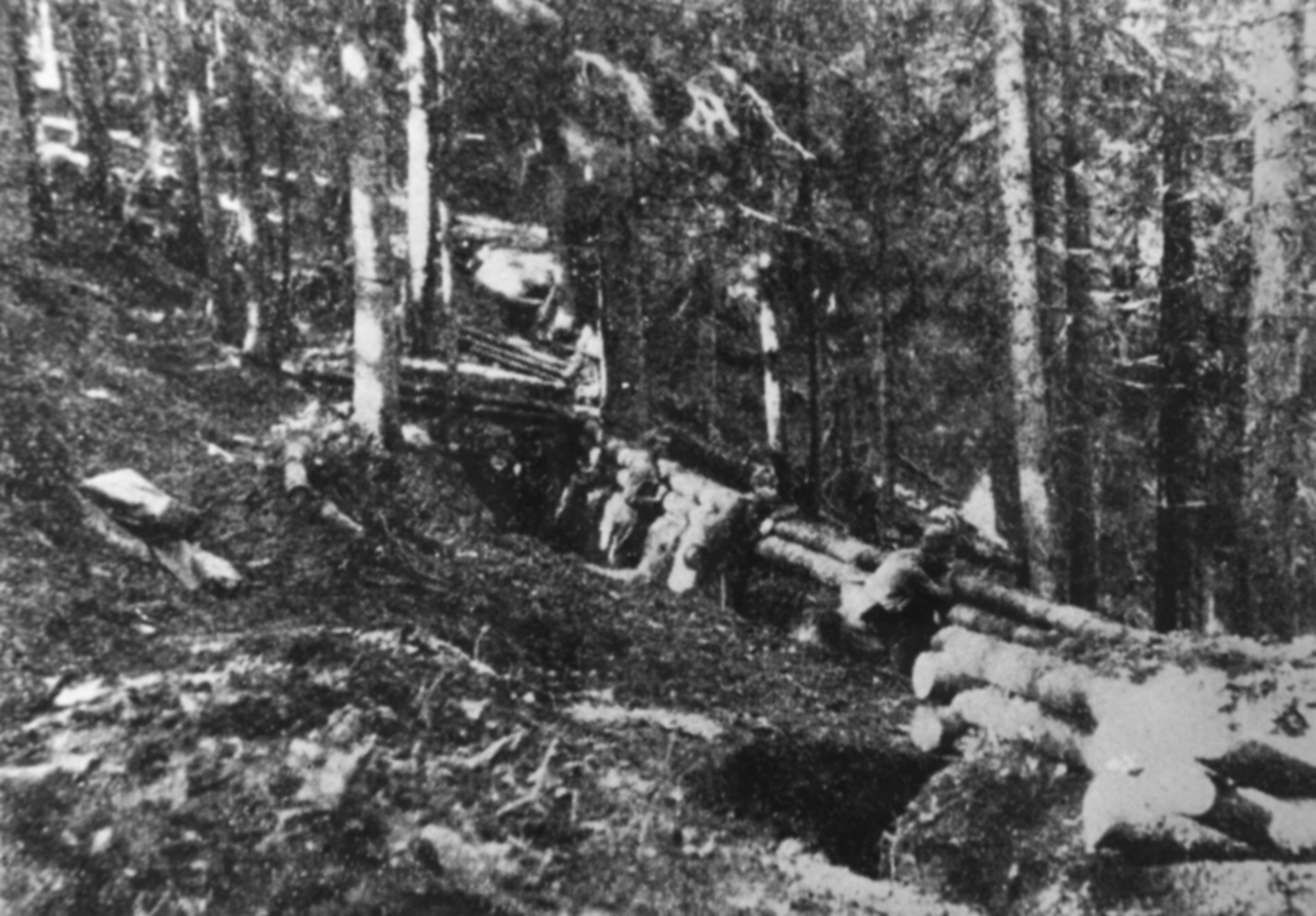
Zákopy 27. delostreleckého pluku v okolí Ruského Potoku (okres Snina – Vihorlat)
Trenches of the 27th Artillery Regiment in the vicinity
of Ruský Potok (Snina – Vihorlat district)
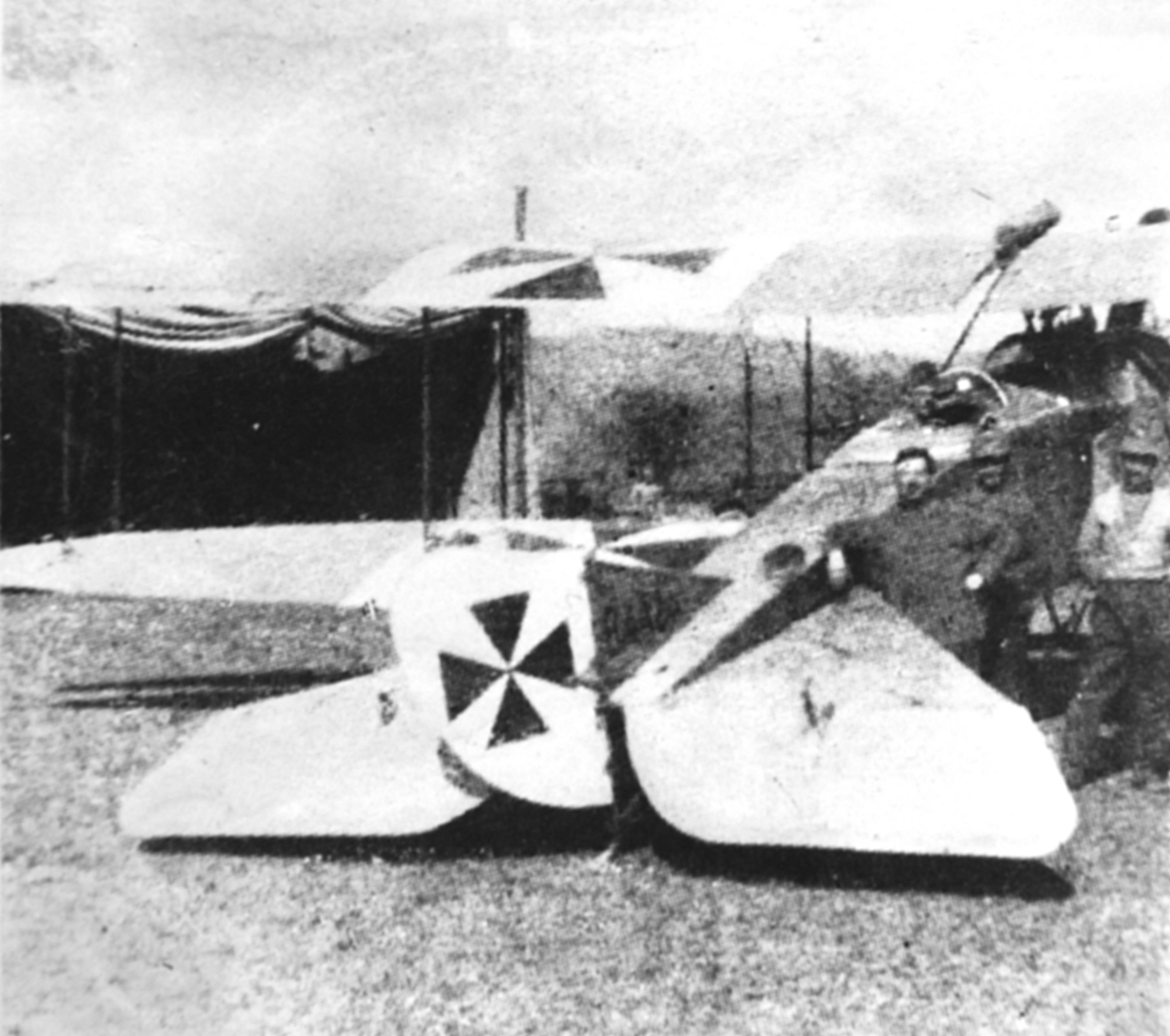
Rakúski letci v Prešove v roku 1915
Austrian pilots in Prešov in 1915
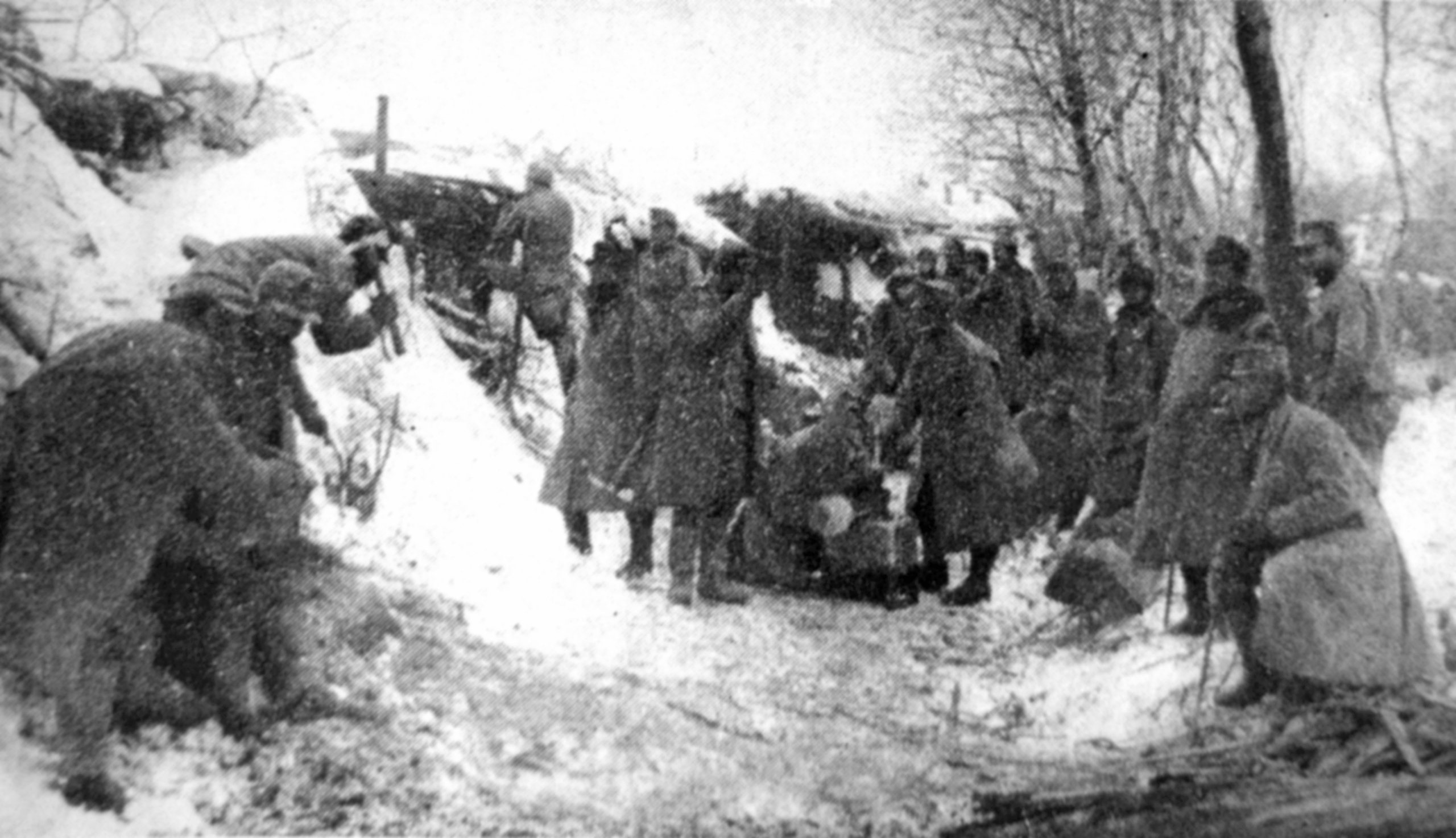
Postavenie 3. práporu 6. pluku 21. divízie rakúsko-uhorskej armády južne od kláštora v Krásnom Brode (okres Medzilaborce)
Position of the 3rd battalion of the 6th regiment of the 21st division of the Austro-Hungarian army south of the monastery in Krásny Brod (Medzilaborce district)
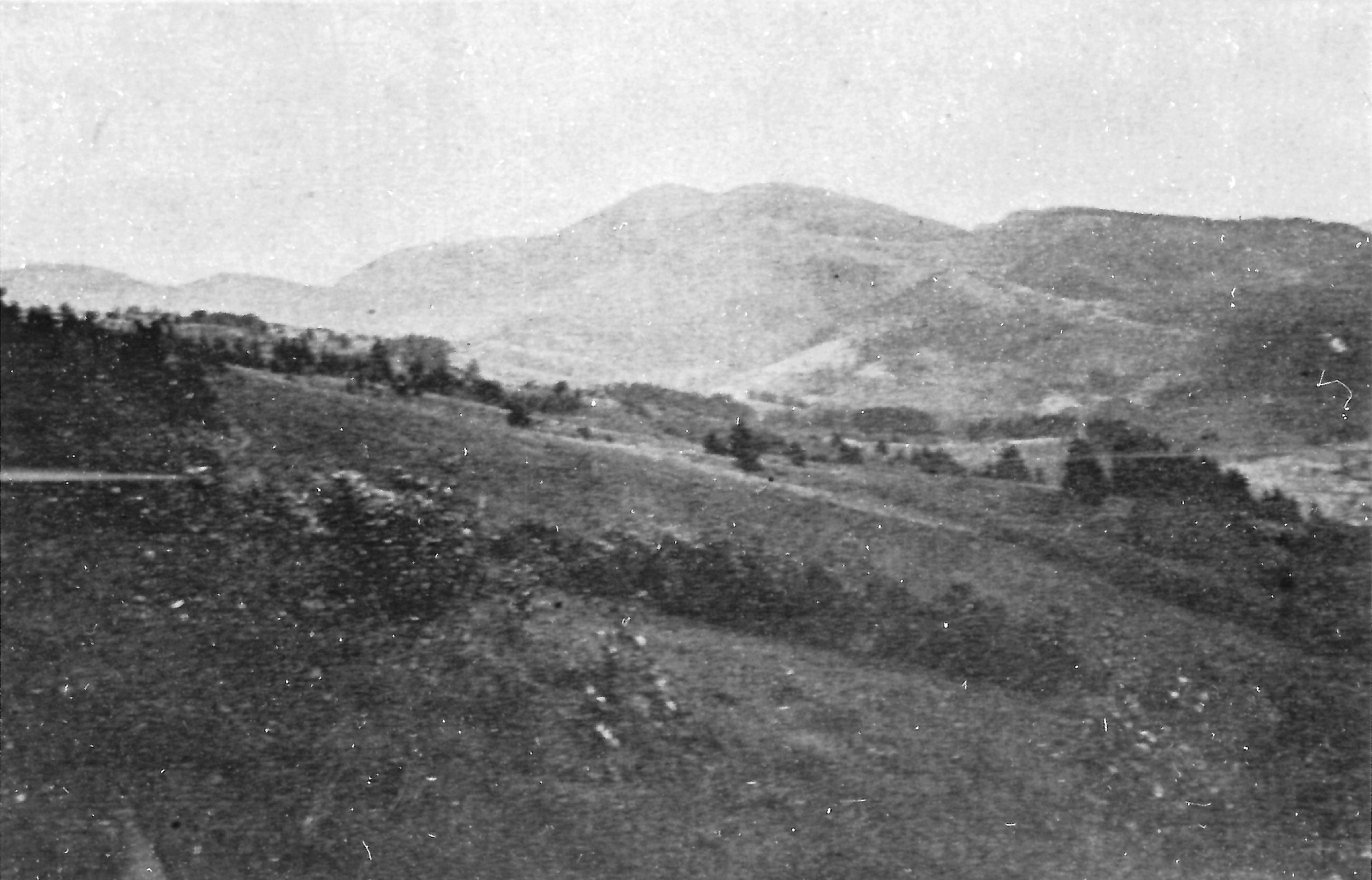
Dukliansky priesmyk v roku 1915
Dukla Pass in 1915

Postavenie rakúsko-uhorských vojakov v priestore Valentoviec v roku 1915
Position of Austro-Hungarian soldiers in the area of Valentovce in 1915

Rakúski dôstojníci na kóte 256 v priestore Čabiny v apríli 1915
Austrian officers at elevation 256 in the area of Čabiny in April 1915

Postavenie 6. honvédskeho pluku domobrany rakúsko-uhorskej armády
pri Čabinách (okres Medzilaborce)
Position of the 6th Honvéd Infantry Regiment of the Austro-Hungarian Army near Čabiny (Medzilaborce district)
Na prelome marca a apríla 1915 sa karpatský front otriasal v bojoch jednej z najdôležitejších bitiek prvej svetovej vojny. V tom čase bola Boroevičova 3. armáda posilnená o 34 tisíc nemeckých vojakov zoskupených v Beskydskom zbore pod velením generála jazdectva Johannesa Georga von der Marwitz. Ruské velenie sústredilo v Karpatoch všetky dostupné sily a od 19. marca 1915 začalo rozvíjať rozhodujúcu ofenzívu, s cieľom preniknúť do centra monarchie a vyradiť tým Rakúsko-Uhorsko z vojny. Ťažisko ofenzívy ležalo v údolí Laborca v smere na Humenné a v údolí Ondavy v smere na Stropkov a pomocný úder bol zasadený i v smere na Bardejov. V Laboreckej doline sa počas Veľkonočnej bitky v Karpatoch (od 2. apríla 1915 do 13. apríla 1915) odohrali jedny z najvýznamnejších bojov prvej svetovej vojny. 3. armáde gen. Boroeviča sa s pomocou nemeckého Beskydského zboru podarilo odraziť ruský útok. Cieľ ruského velenia o prielom rakúsko-uhorskej obrany v priestore Medzilaborce – Humenné – Snina sa nepodarilo naplniť.
At the turn of March and April 1915, the Carpathian front was rocked by one of the most important battles of the World War I. At that time, Boroevic´s 3rd army was strengthened by 34 thousand German soldiers grouped in the Beskydy Corps under the command of General of Cavalry Johannes Georg von der Marwitz. The Russian command concentrated all available forces in the Carpathians and from March 19, 1915 began to develop a decisive offensive with the aim of penetrating into the centre of the monarchy and thus knocking Austria-Hungary out of the war. The focus of the offensive was in the valley Laborec in the direction of Humenné and in the Ondava valley in the direction of Stropkov, and an auxiliary strike was also launched in the direction of Bardejov. During the Easter Battle in the Carpathians (from April 2, 1915 to April 13, 1915), some of the most important battles of the World War I took place in the Laborec valley. The 3rd Army of gen. Boroevic managed to fight off the Russian attack with the help of the German Beskydy Corps. The goal of the Russian command to break through the Austro-Hungarian defence in the Medzilaborce - Humenné - Snina area could not be fulfilled.
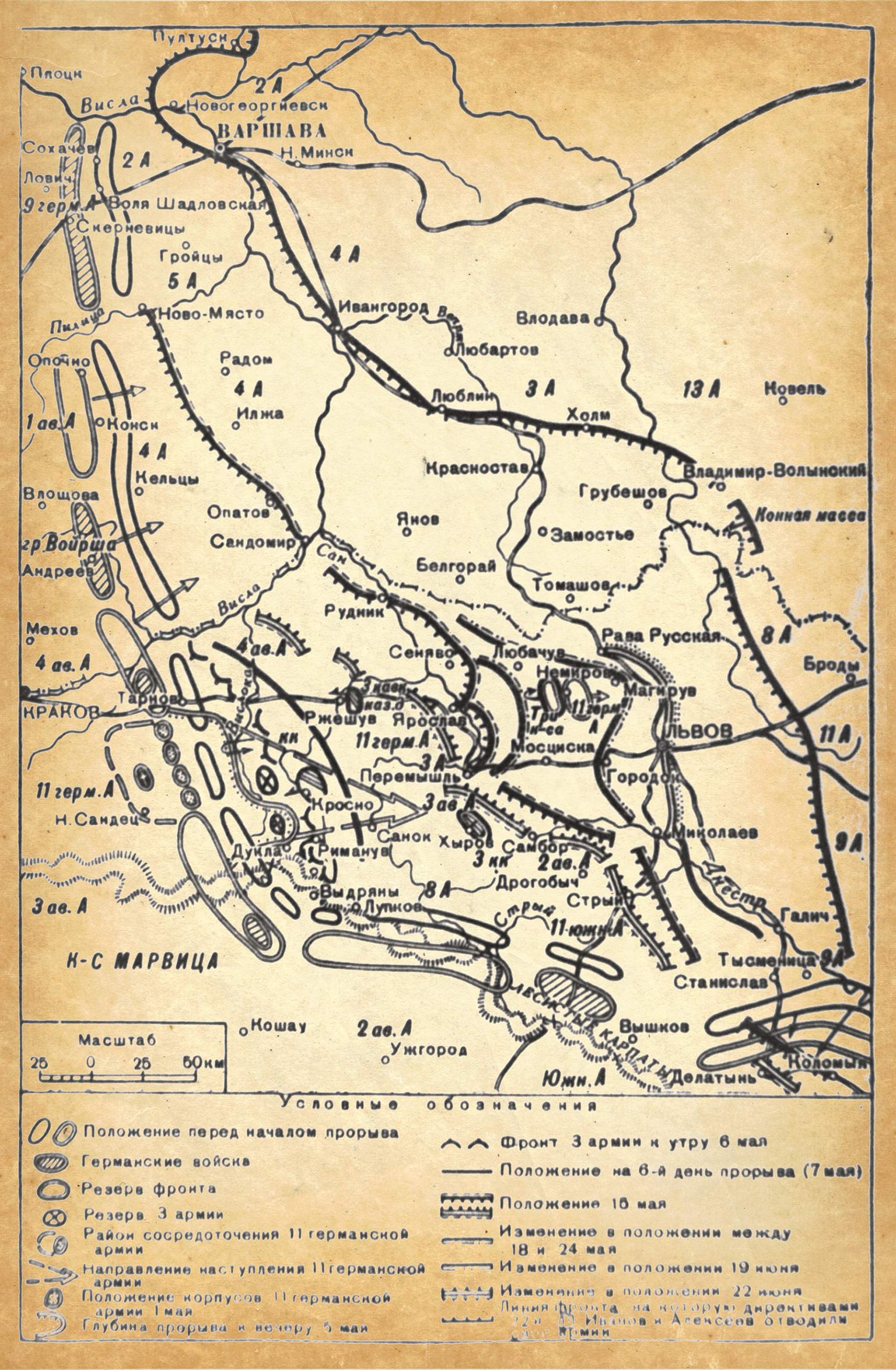
Zásadný zlom nastal začiatkom mája 1915,
keď sa začala rozsiahla prielomová ofenzíva nemeckej a rakúsko-uhorskej armády v priestore Gorlíc v Poľsku. Ruská armáda v Poľsku bola nútená ustúpiť smerom na východ. Z tohto dôvodu bola nútená ustúpiť z karpatského oblúku aj Brusilovova 8. armáda.
Začiatkom mája 1915 ustúpili z územia dnešného Slovenska poslední ruskí vojaci. Následne boli do konca júla 1915 vytlačené ruské vojská takmer z celej Haliče a Bukoviny.
Vpravo: Mapa gorlického prielomu nemeckou a rakúsko-uhorskou armádou
2. mája 1915
A fundamental turning point occurred at the beginning of May 1915, when a large-scale breakthrough offensive of the German
and Austro-Hungarian armies began in the Gorlice area in Poland. The Russian army in Poland was forced to retreat eastwards. For this reason, even Brusilov‘s 8th army was forced to retreat from the Carpathian Arc.
At the beginning of May 1915, the last Russian soldiers retreated from the territory of today‘s Slovakia. Subsequently, by the end of July 1915, Russian troops were pushed out of almost all of Galicia and Bukovina.
On the right: Map of the Gorlice breakthrough by the German
and Austro-Hungarian armies on May 2, 1915